Why making friends as an adult is secretly a logistics failure - and the quiet fix that's starting to spread.
In 2018, a researcher at the University of Kansas named Jeffrey Hall tried to put a number on something we usually treat as mystical: How long does it take to make a friend.
He Surveyed hundreds of adults who'd recently moved to a new city and tracked their new relationship deepened over the following months. What came back wasn't poetry. It was an exchange rate for intimacy.
Roughly 50 hours of time together to turn an acquaintance into a person they call casual friend.
Around 90 hours to become an actual friend. And more than 200 hours before someone crosses into "close friend."
There's one detail that quietly ruins everything: Hours spend working together barely count. The time has to be voluntary, social, and mostly off the clock.
Now hold that number - 200 hours - against how many people actually live.
According to the U.S. Census Bureau's time-use data, the average American spent about two hours and 45 minutes a week with friends in 2021, down from roughly six and a half hours a decade earlier - less than half. Among 15 to 25 year olds, in-person socializing fell from 61 minutes a day in 2003 to 39 minutes by 2019, then kept sliding to an all-time low. It's a US dataset, but it tracks a patterns showing up across most wealthy, urbanizing societies.
Do the arithmetic. If you're trying to build a close friend from scratch on snack-sized weekly doses, you're looking at years. That's not a feeling. That's a schedule that doesn't close.
The epidemic is misdiagnosed
In 2023, the U.S. Surgeon General declared loneliness a public health epidemic, pitting to a 2010 meta-analysis of around 300,00 people that found chronic social disconnection raises the risk of early death on a scale comparable to smoking up to 15 cigarettes a day. About half of adults reported experiencing loneliness.
We tend to file all of this under feelings - sad people who want connections but can't find it. But the framing hides the actual mechanism. Almost everyone wants friends. Desire was never the bottleneck.
The bottleneck is hours. And not just any hours - repeated, voluntary, low-stakes hours spent in the same room as the same people outside of work. That's the raw material friendship is made of, and modern life has quietly stopped supplying it.
Where the hours used to come from
For most of history, nobody engineered friendship. It fell out of institutions you were already inside.
Churches, unions, bowling leagues, neighborhood density, civic clubs, the corner where everyone happened to be -these things had one feature in common, and it had nothing to do with their stated purpose. They put the same people in the same place, repeatedly, on a schedule, without anyone having to organize it. They were hour-factories running in the background. The 200 hours accumulated whether you were paying attention or not.
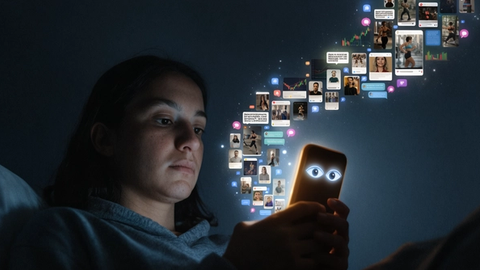
As those institutions eroded, the hours didn't get replaced. Family time didn't absorb the gap. And social media — built to feel like connection — mostly delivers snacks: a like, a reply, a scroll. Never the slow, repeated, in-person co-presence the friendship math actually requires.
The cold-start problem
Here's where it gets vicious. Even someone who knows they need to rebuilt their social life, hits a wall.
To band 200 hours, you need a recurring group. But joining a recurring group as a stranger is socially expensive. You have to walk alone, knowing no one, and accept the real risk of being the awkward outsider who doesn't fit. The cost is paid upfront and in full, while the payoff -a friend, eventually - is distant and uncertain.
So the want never converts into the action. This is the cold-start problem, and it's the specific failure point where loneliness actually lives. Not "I don't want friends." Rather: "I can't make myself walk into that room."
Why activity fairs work
Lately a small, almost old-fashioned fix has been spreading: the activity fair. One room, one afternoon, dozens of clubs and community groups all openly recruiting new members at once. Cooking circles, sports leagues, reading groups, civic organizations - laid out like a marketplace.
It seems unusual. But look at what it does structurally, because it attacks the exact bottleneck:
It collapses the search cost. Instead of hunting across the internet for a group that might fit, everything is in one place, browsable in an afternoon.
It inverts the social risk. The thing that makes joining hard is showing up alone as a stranger. But at a fair, everyone is openly looking - so arriving alone isn't awkward, it's the entire premise. The format hands hesitant, introverted, newly-arrived people something they can't manufacture for themselves: permission to participate.
And it routes people toward the right kind of commitment. The group that work are the recurring ones - the weekly league, , the monthly cook-along, the six-week class — because those are the formats that quietly bank hours. A one-off event leaves you stranded at "acquaintance." A recurring group is a 200-hour machine you've just been plugged into.
The real shift
Step back and the activity fair stops looking like a feel-good local-news story and starts looking like something more telling.
For most of human history, connection was a byproduct. You didn't budget for it or schedule it; it was emitted by the institutions you already lived inside. What's genuinely new isn't that people stopped wanting friends. It's that connection has become something you now have to deliberately manufacture — a project with a logistics layer, a permission problem, and an explicit hours target.
The activity fair is early, primitive infrastructure for exactly that world: a society that has to rebuild its social fabric on purpose, because the background process that used to do it for free has shut off.
The 200 hours haven't changed. What changed is that nothing hands them to you anymore.
Whoever works out how to mass-produce low-stakes, recurring, in-person co-presence - and the humble activity fair is one of the first crude attempts — is quietly solving one of the defining problems of the next decade.