The reshuffle
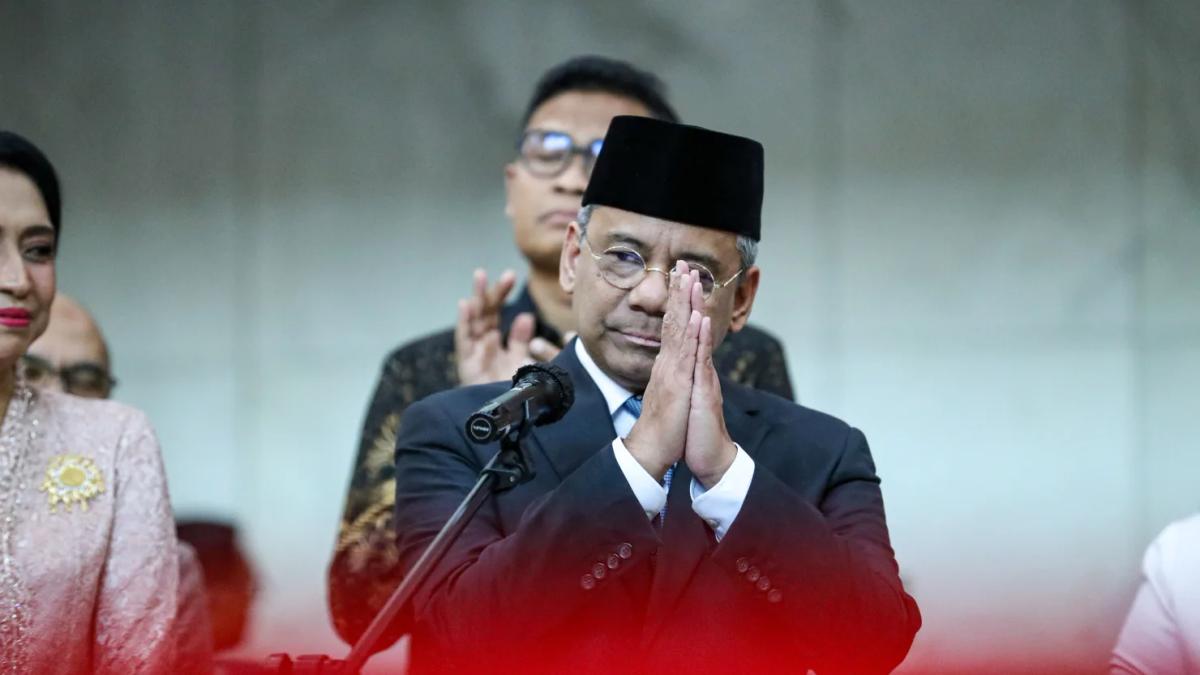
On Monday President Prabowo Subianto dismissed Finance Minister Purbaya Yudhi Sadewa and appointed his deputy, Suahasil Nazara, who has therefore been the third individual to hold the post since Prabowo became president in late 2024. Purbaya found out that he had been fired during a phone call from the president's spokesperson while he was in the middle of giving an answer at a parliamentary hearing on Prabowo's 2027 budget. Nazara was then sworn in a few hours later.
To the markets, the appointment served as a source of reassurance since Nazara is a well-known technocrat who has extensive experience within the ministry and is connected to the Sri Mulyani period, thus reducing the risk of transition since he is already familiar with the budget system. The rupiah had reached a level of about 17,680 to the dollar by Wednesday, and analysts described this as a "welcome development."
Why Purbaya had to go
The one year that Purbaya served was a difficult one. This year the benchmark index in Indonesia declined by more than 25 per cent, the currency reached its lowest levels in June, and both Fitch and Moody's downgraded their outlooks because of policy uncertainty — even though growth had risen to three-year highs. The rising cost of energy, partly due to the energy crisis resulting from the Iran-war, caused the subsidy bills to increase and led to cuts in the main programmes.
However, the sources present a more complicated account than that of "underperformance". It appears that Purbaya was dismissed following a clash with a high-ranking official who had previously served on Prabowo's former special forces team — this was the result of intramural rivalry, not a straightforward policy reset. Moreover, the straightforward economist had also provoked criticism in the region in April by proposing a fee for ships passing through the Strait of Malacca, one of the world's most heavily used maritime routes.
The story underneath the story
The part worth paying attention to is that the finance minister is not the only person to have changed positions. Bank Indonesia's governor suddenly resigned in July, and in February Prabowo's own nephew was appointed as a deputy governor of the central bank. This development has left analysts concerned, one of them describing Nazara's promotion as '& a further and worrisome sign of the consolidation of economic power in the hands of Prabowo' and expressing clear concern regarding the central bank's independence.
The genuine issue that this cabinet reshuffle brings is that Nazara has strong technocratic qualifications which reduce the immediate risks, yet he has been given an impossible task—raising the funds needed for Prabowo's costly growth programme, such as the problematic free school-meals initiative—despite the steadily shrinking fiscal space—and at the same time keeping the deficit below the legally prescribed 3% of GDP. What matters isn't whether he appears to be disciplined; what matters is whether he in fact cuts the expensive programmes that have not delivered, or whether his discipline remains merely rhetorical while the president continues to consolidate his control over both the budget and the bank.