
The hidden systems that run the world.
The chokepoints, the single points of failure, the quiet levers of power — the story underneath the headline, not the headline itself. 3 times a week, no fluff.
- Free. Forever.
- No clickbait. No paywall.
- Unsubscribe anytime
Check your inbox to confirm your subscription.
Why readers love ThinkAbout
See the system, not just the story
We name the chokepoint, the dependency or the lever behind the headline.
Know how it actually works
Leave every issue understanding one more piece of how the world runs.
Read in under 5 minutes
Designed for busy people. We respect your time.
One lens on everything
AI, technology, business, economy, finance and science — all read the same way.
Here's what you'll get, 3 times a week
- The hidden mechanism, named in plain words
- Context you won't find in headlines
- Who holds the leverage, and what depends on it
- Handpicked deep dives
- No fluff. Just signal.
Latest from the newsletter
 Business & Power
Women now outnumber Men at work but not because Men are getting Fired
For eight straight months, women have outnumbered men in the US workforce — the longest such stretch since 2010. But the reason is the opposite of what it was back then. In 2010, men were losing jobs. This time, men are roughly flat and women are simply gaining. There are a million fewer employed men than a year ago, and the explanation isn't discrimination or decline. It's which industries happen to be growing.
 Business & Power
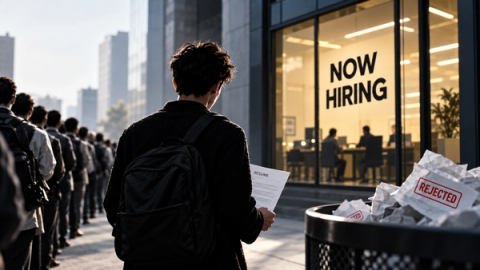
The Job market where nobody hires and nobody leaves
A $150-an-hour remote assistant job drew 2,000 applicants in days. That's not a fluke — it's the shape of a labor market economists now call "low-hire, low-fire," where almost nobody gets laid off and almost nobody gets hired either. For job seekers, it's the worst kind of stuck. And the instinct it triggers — fire off hundreds of applications — is exactly the move experts say makes it worse.
 Science & Discovery
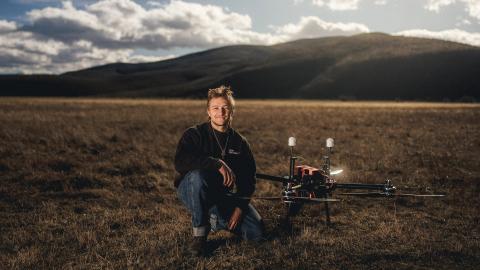
This startup is trying to make it rain for $100 million
A three-year-old company just raised $100 million to fly drones into clouds and squeeze rain out of them. Rainmaker says its Alaska tests pulled 19 million gallons of precipitation from the sky in three hours. If that number holds up under scrutiny, the business of manufacturing fresh water on demand stops being science fiction and starts being a market.
 Science & Discovery
A Dead Star Is Doing Something Physics Can't Explain
730 light-years away, the burnt-out core of a dead star is blasting a shock wave across space — a structure it has no known way of producing. No disk to feed it, no mechanism to power it, and it's apparently been running for over a thousand years. Astronomers found what one calls a "mystery engine," and the honest answer to what's driving it is: they don't know.
 Business & Power
A Daughter changes how a Man runs a Company
Economists found something unsettlingly specific in Danish payroll data: when a male manager has his first daughter, the women who work for him start getting hired, promoted, and paid more. The manager didn't take a diversity course or read a memo. He just had a kid — and his behavior toward half his workforce quietly shifted.
 Science & Discovery
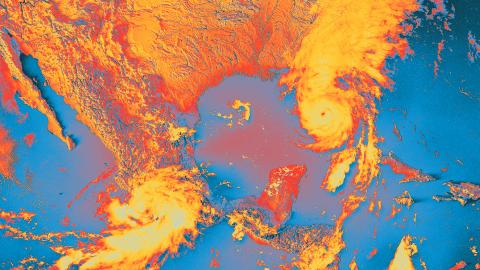
A strong El Niño actually means fewer Atlantic hurricanes, but the Pacific has been extra stormy
It's late September, peak hurricane season, and the Atlantic hasn't produced a single hurricane — something that hasn't happened in over a century. Meanwhile the Pacific is throwing record-breaking storms. Two oceans behaving in total opposition, and the same force is behind both: a "Godzilla" El Niño shaping up as one of the strongest ever recorded.
 Deep Dives
Do you know that Walter White and Jesse Pinkman served alcohol at Downtown Disney?
Yes, really. Bryan Cranston and Aaron Paul, who played Walter White and Jesse Pinkman in Breaking Bad, were spotted behind a bar at the “happiest place on Earth,” pouring shots for fans. The show, which holds the Guinness World Record for the “Highest-Rated TV series”, ended in 2013… but the friendship? Yeah that never ended.
 AI
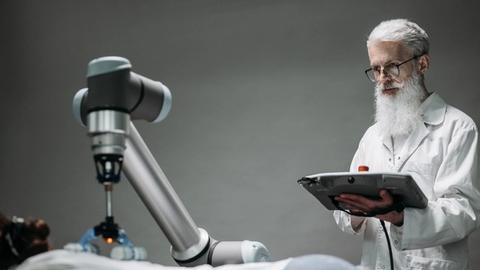
AIAI won a Nobel but still can't prescribe you anything
A recent NBC News/Decision Desk poll found 70% of US adults are more worried than excited about AI, and it polls badly in nearly every corner of life — with one clean exception: scientific research and medicine. Dr. Dhruv Khullar, a physician at Weill Cornell and New Yorker writer, says the optimism holds up, and that healthcare is absorbing this technology faster than any he's seen. His theory for why is bleak: the system is so broken — unaffordable, inaccessible, uneven — that the appetite for any change is enormous.
 Technology
Spotify just handed you full control of its algorithm
Spotify recommendation engine used to be a mystery box; it would follow your choices of music and recommend the next one for you automatically without any input from your side. However, the newly added Taste Profile option allows you to give your preferences and recommendations in ordinary language. It is an easy option with an even more profound meaning regarding who controls the feed.
 Finance
The SIP Generation Is About to Meet Its First Real Bear Market
A whole cohort of Indian investors started investing after 2020 and has never seen a sustained fall. What they do in the first bad quarter matters far more to their returns than anything they've bought so far.
 Economy
Indonesia just swapped its money chief again - and the real story is who's holding the purse
In two years, Indonesia has burned through three finance ministers. The latest firing came by phone, mid-hearing, while the minister was answering questions about next year's budget. Markets cheered the replacement. But the more interesting question isn't whether the new technocrat can steady the ship — it's how much of the ship the president is now quietly steering himself.
 Technology
A shovel grounded thousands of flights
Not hackers, not storms, not software malfunctions. In New Jersey, construction workers cut a Verizon fiber line. As a result, all major airports in New York were paralyzed. More than 1,000 American flights had to be canceled because of that. What is frightening is not what caused the problem but how easy it was to cause it.
Meet the writers
We're humans, not algorithms. Every story is researched, written and edited by real people who care about getting it right.
Learn more about us →

Frequently asked questions
Is ThinkAbout really free?
Yes — entirely. Every issue and every article on the site is free, with no paywall and no premium tier.
How often will I receive the newsletter?
3 times a week — Monday, Wednesday and Friday. Never more than that.
Can I unsubscribe anytime?
Of course. Every email has a one-click unsubscribe link at the bottom, and you're removed immediately.
Do you share my email with anyone?
Never. Your email is used only to send you ThinkAbout.
Ready to see the systems underneath the headlines?
Check your inbox to confirm your subscription.
No spam. Unsubscribe anytime.