The thing that shouldn't be there
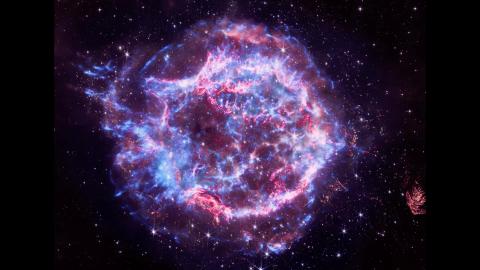
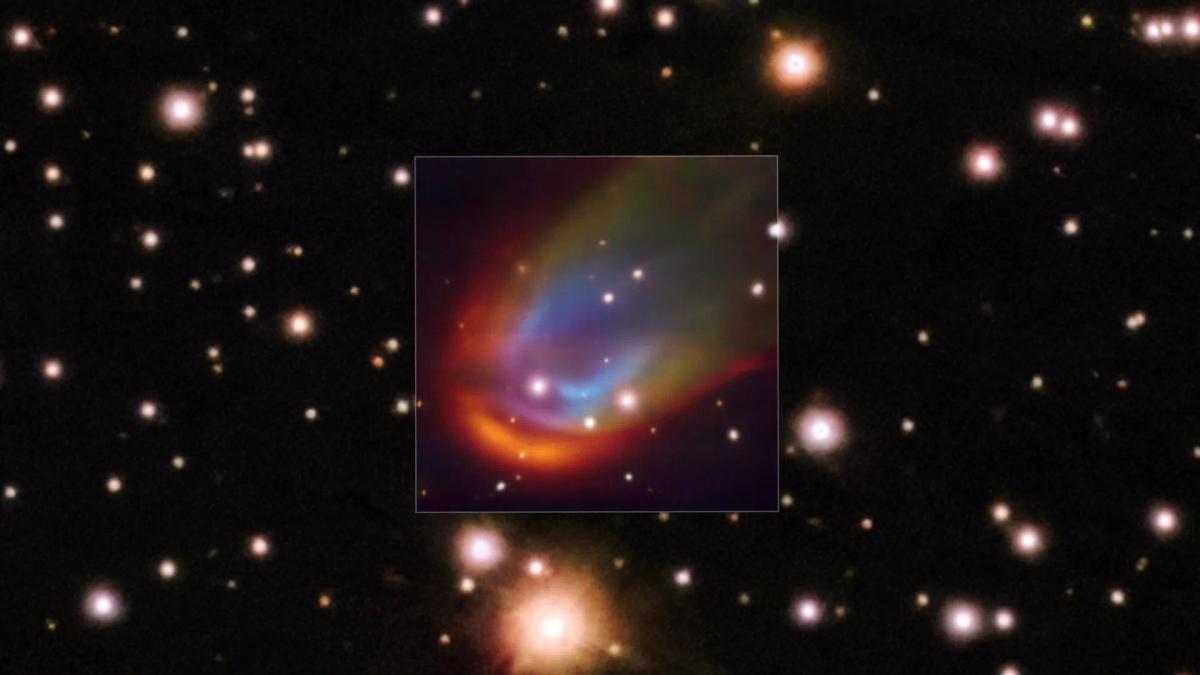
With the help of the Very Large Telescope in Chile, scientists observed a bow shock, which means the presence of an arc-shaped formation (like waves in front of the bow of a boat), surrounding a white dwarf named RXJ0528+2838. There is nothing unusual about it, since bow shocks appear when stars collide with interstellar gases. However, the issue here is that the object shouldn't have been creating a bow shock in the first place. According to all known phenomena, this small celestial body shouldn't have been able to create such a formation.
The inadequacy of the typical solution
Typically, the tale is straightforward. The white dwarf draws material from its binary companion, and the result is a disc, which in turn feeds the defunct star while part of the material shoots out as an outflow. Discs in, outflows out. In the case of RXJ0528+2838, the sequence is disrupted: the disc is non-existent. Scientists have discovered the companion, outflow, and nebula; the one element missing from this equation – and the one meant to be the source of energy for everything else – is the disc.
Timeline worsens the problem
The magnitude and structure of the shock wave indicate that the process of outflowing material has been going on for more than a thousand years. The first suspect is the very strong magnetic field of the star, which would have directed all the material falling towards the white dwarf directly to it rather than allowing it to form a disk. However, the magnetic field does not quite work here because according to calculations, the current magnetic field could sustain such a shock wave for about a few hundred years, not a thousand.
Importance of such a gap
An unexpected flow of matter from a dead star may seem a minor fact. It is not the case, however. The conventional idea of the processes of energy and matter distribution in these binary systems suggests that the disk serves as an energy source. Finding a system operating properly without a disk indicates that the existing concept does not cover all aspects, and some other energy source exists which is still unknown to physics. What comes next is to find more systems of the kind and wait for the Extremely Large Telescope of ESO to see the faint ones.