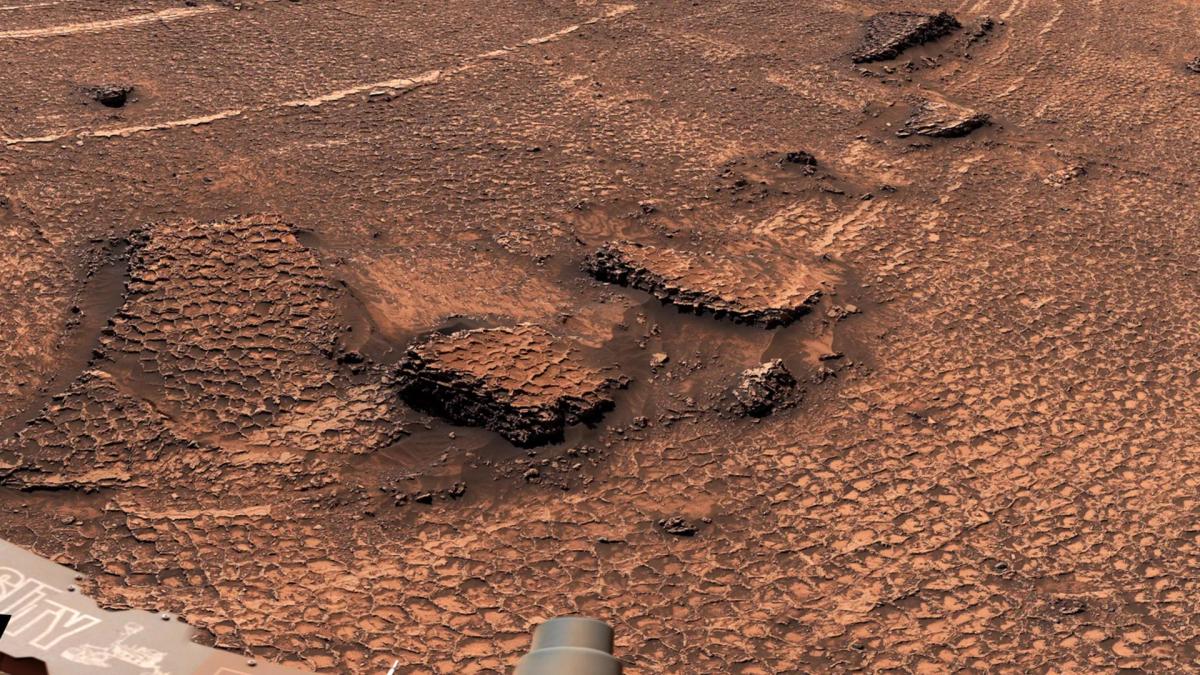
A sea of hexagons
While climbing through a valley named Valle Grande, Nasa's Curiosity rover rolled into a terrain covered in honeycomb like cracks -- polygons roughly 4 to 8 centimeters across packed edge to edge. The Rover earlier had seen small clusters, but had never seen a field like this before. A 360 degree panorama shot over two Martian days in June shows the shapes running in every direction, as far as the cameras can see, and climbing the flank of a nearby butte called Miraflores.
The interesting part is the uncertainty
Some of these polygons Curiosity rovers has studied, clearly started as just a drying mud, cracking the way lakebed does under the sun. But several processes make the same shape. Repeated freezing and thawing fractures ground into geometry. Compression can then force water out of buried sediment and leave a similar honeycomb behind. As of now, scientists don't know which one - or which combination - carved this Valle Grande valley. They have the shapes and the chemistry but they don't yet have the mechanism.
The gap is the whole story. A clean pattern with no confirmed cause is exactly the kind of thing planetary science lives and thrives on.
Why it matters beyond the picture
The polygons sit on Mount Sharp. It's a mountain Curiosity has climbed since 2014, along with the ground that once held lakes and streams. In the same wetter chapter, the rover has turned up carbon based molecules considered precursors to RNA and DNA. Nobody can say whether those honeycombs formed through biology or just plain chemistry. But the pattern still holds, every stop on this climb keeps confirming that ancient Mars had the ingredients life would need to thrive. A field of Hexagons is a puzzle, and the reason we care about it is because we don't know what those rocks keep hinting at underneath.