The number that's driving bad decisions
Gallup has estimated the cost of low engagement at about $10 trillion each year, with 2025 showing the lowest level of engagement since 2020 and representing a two-year global decline. This figure has now been used as a reason for a series of return-to-office orders. The reasoning appears straightforward: since people are disengaged, get them back to their desks.
The same research actually undermines the entire argument. Gallup discovered that remote workers are more engaged than their hybrid or in-office counterparts. It isn't attendance that solves the problem; considering it to be the solution is the real error.
Attendance is a byproduct, not a target
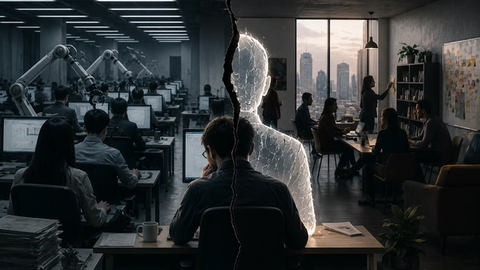
The offices that people tend to avoid were designed as desk farms — workstations that were optimized for the purpose of supervision rather than for making employees want to be there. The offices that manage to attract people provide something that cannot be replicated at home. Pinterest organised its Dublin office around Irish culture, including a fully functioning pub and a workspace which synchronises the ambient sound to the weather outside, and as a result attendance rose by 55% within a few months. The increase in attendance was merely a byproduct. The aim had been the design.
If a space provides value that you can't obtain anywhere else, then people will turn up spontaneously. If you make someone go on the trip without altering what is available at the end, you've simply added a commute to disengagement.
The quieter driver: AI is thinning connection
There's a second force underneath the number. In one survey, 43% of consumers named reduced human interaction as their top AI worry — ahead of job loss. More than a fifth of Gen Z workers say AI tools have made their relationships with colleagues worse. As people route questions to a model instead of a coworker, the small collisions that build a team quietly disappear. The fix isn't banning the tools. It's introducing them with the workforce rather than on top of it.