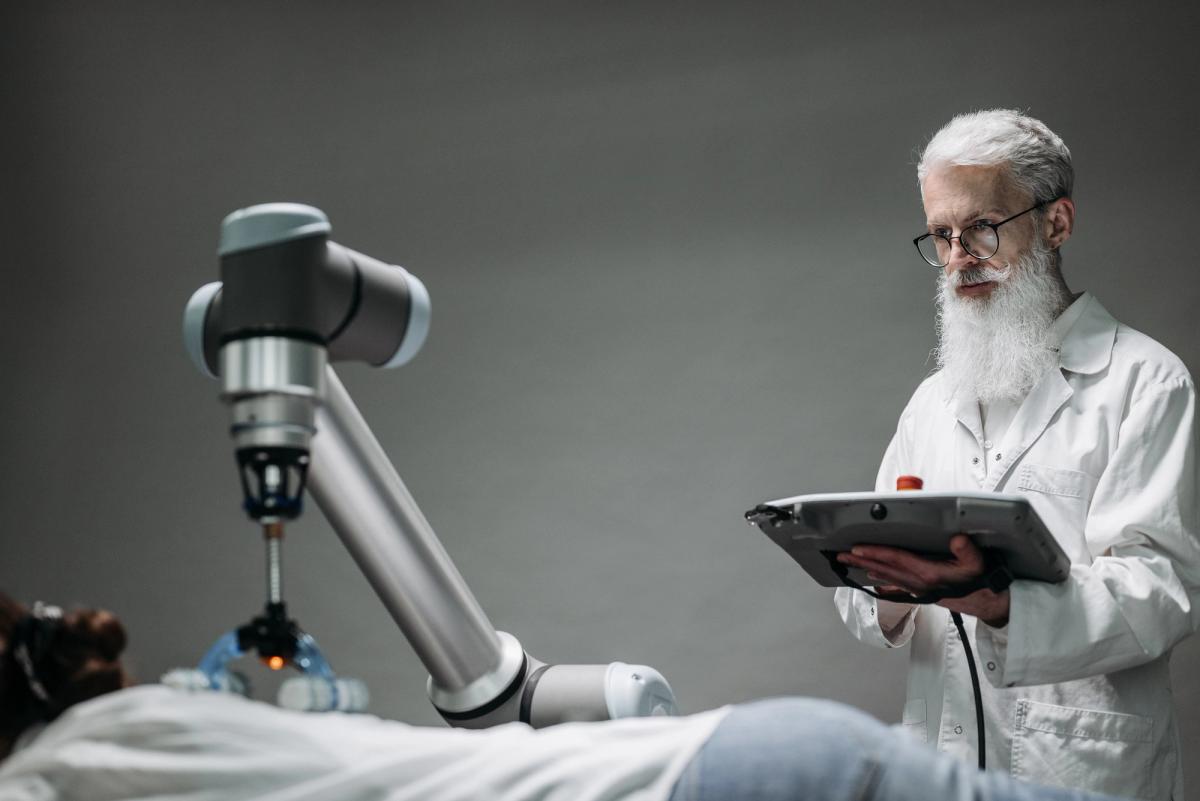
The one place AI isn't underwater
A recent NBC News/Decision Desk study found that about 70% of US adults are now more worried than excited about AI (just like we were), and it polls badly in nearly every corner of life, with one clean exception: scientific research and medicine.
Dr. Dhruv Khullar, a physician at Weill Cornell and New Yorker writer, says the optimism holds up and that healthcare is absorbing this technology faster than any he's seen so far. His theory is far too bleak: the system is so broken, unaffordable, inaccessible, and uneven that the appetite for any change is enormous.
Where it's already working
The uptake seems real but unglamorous. The fastest wins have been noticed in administration. AI scribes now take notes during visits, letting doctors look patients in the eye instead of a screen.
Next is navigation—answering endless questions that patients have, like "When's my scan? Do I take this on an empty stomach?" questions that bury anyone managing a serious illness. Khullar himself uses AI daily as a first-pass second opinion: what am I missing, what test should I be ordering, and what recent trial applies here? None of this is the machine running the hospital. It's the machine that is clearing the clutter.
The drug-discovery split
Now this is the part that is worth understanding precisely, because it's where all the hype lives. Drug discovery has two halves, and AI has conquered only the first. In the early phases, sifting a near-infinite space of possible molecules, ranking which protein targets likely drive a disease, and generating candidate molecules to hit them—AI compresses work that might take researchers months or maybe even years. It can scan vast chemical spaces and hand you a shortlist.
Then it hits the wall.
The second half—does this actually work on human biology—stays a stubborn analog. Models hallucinate molecules that can't be manufactured or ones toxic in ways they never predicted. You still need wet labs, human judgment, and clinical trials with real people willing to put the drug in their bodies. AI just narrows the funnel at the top. It cannot walk anything through the bottom.
The quiet risk
The threat Khullar flags isn't AI seizing the hospital. It's atrophy. Lean on the machine long enough, and the diagnostic reasoning a doctor spent years building starts to erode slowly, the skill you'd need precisely when the model is confidently wrong. That is the real tension here: these tools are most dangerous not when they fail, but when they succeed often enough that humans stop checking them and blindly believe them. His counter to the "shut it all down" camp is pragmatic—you don't even need frontier models to fix healthcare; two-year-old models would already help you in that. Slow the dangerous frontier if you must, but pulling AI out of clinical care is where he pushes back hard.