The internet is Filling Up with AI… We don’t have any idea how much
You scrolled past something AI-made today. Probably more than once. A caption, an image, a video that felt just a little too much of what the internet calls ai slop.It doesn't hit the same anymore. Nobody really enjoys it now.
The internet has a problem—and you're probably part of it.
It Actually Started Pretty Quiet.
In 1950, Alan Turing basically raised a question: can a machine talk like a human well enough that you can’t tell the difference? For decades, that question just stayed a query. Chatbots existed, sure, but nowhere near convincing.
Then 2017 happened. A piece of research introduced something called the Transformer; yes, T in GPT stands for transformer – the foundation of modern Artificial Intelligence. Nobody outside the lab noticed. That's how the biggest changes usually begin.
We had time to see it coming. We weren't looking.
For a few years, generative AI stayed noticeable; you could always tell whether the text, image, or video was human or AI. GPT could write, but something was off if you looked closely. DALL·E turned text into images, but they looked like AI images.
Midjourney let millions of people create AI art. The internet quickly filled with it—but most of the time, you could still tell it was AI.
November 2022, ChatGPT launched, and something shifted. Not the tech exactly – the access. Now everyone has it. Not researchers or developers. Everyone.
This was the moment. The one point where we could have pointed out the upcoming mess. We didn’t, as we were too busy enjoying the heck out of it.
When AI started outpacing us.
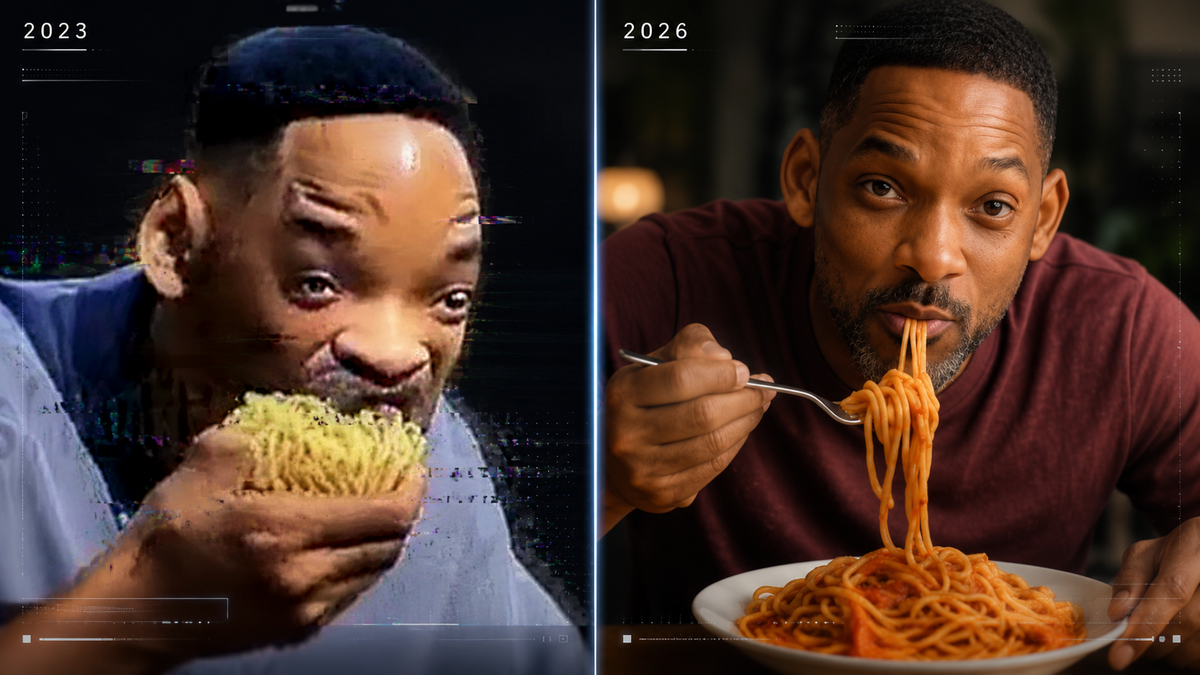
Year 2023. Remember that weird AI-generated video of Will Smith eating spaghetti that went viral. By that time, GPT-4 could understand images and text together AI video started catching up fast. In 2024, Sora showed the internet cinematic, text-to-video generation, and AI assistants started seeing and talking back in real time. That's already a lot. But it's not where it gets messy.
2025 Is Where It Gets Real.
That's when AI stopped waiting for a prompt and started acting on its own — researching, coding, planning, executing multi-step tasks without someone typing every single instruction. And by 2026, AI isn't a tool it is a necessity. It became something people relied on every day.
And today, "AI-generated content" stopped being a category and became a constant in the world of social media — and out of our hands.
Nobody's counting it anymore. Not the platforms, not the researchers, not you. We don't have any idea how much of what you see is even real. That's not a stat we're missing. That's a stat that stopped existing to track in the first place.