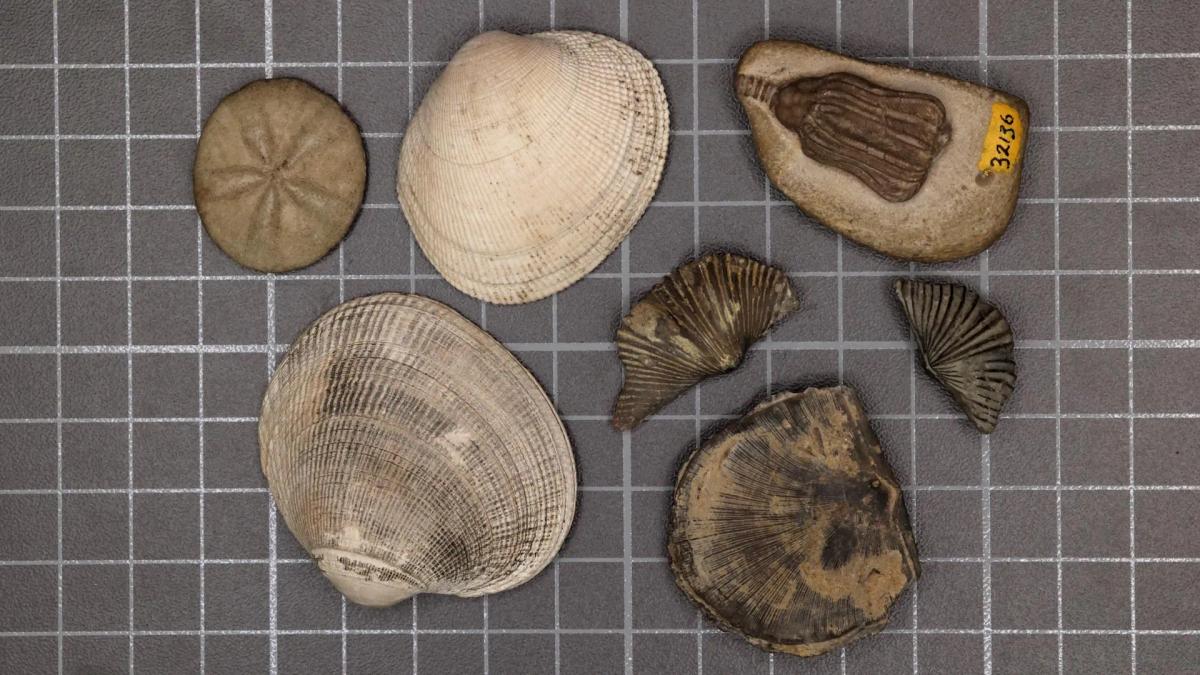
Go to any beach around the world, and you'll take home the same collection: shells of clams and snails, an occasional sea urchin. There won’t be many brachiopods — a clam-like animal that dominated the bottom of the ocean for 280 million years until it almost disappeared. In a study led by Stanford researchers and published July 6 in PNAS, the mystery is finally solved. Around 252 million years ago, the “Great Dying” extinguished 96% of marine life. But it was no indiscriminate slaughter. It used a metabolic filter — one that’s being flipped today.
It wasn't bad luck — it was physics
This is the point worth mulling over: the largest extinction event in earth’s history was no accident. This was physics picking out biology. Prior to the Permian Triassic catastrophe, life in the oceans was laid back. Brachiopods, crinoids, and other filter feeders that made their home on the floor of the oceans had ruled for some 280 million years – lazy creatures with little need for energy and happy to simply hang out filtering the water. What followed was an explosive release of volcanic activity resulting in vast amounts of CO2 and methane entering the atmosphere. Earth became hot and oxygen poor, and the creatures well adapted for cooler conditions went bust.
The test no one had run before
However, what makes the work done by Erik Sperling and Jose Andres Marquez unique is that for the first time ever the physiology of both the losers and the survivors was measured. Chasing live brachiopods in the San Juan Islands of Washington, they subjected both ancient and modern organisms to the same test, namely how many oxygen units each of them requires when the water becomes warm? The slow ancient Paleozoic animals had no problems surviving in low-oxygen environment. However, when the temperature rose, their requirement for oxygen increased faster than their capability to provide it. The newcomers such as fish, snails, clams, and urchins were able to do so because they were equipped with the necessary muscular system and gills.
Why there's no brachiopod chowder
It is one distinction that changed everything. Brachiopods now number only around 400 different species, whereas bivalves account for 10,000 to 15,000 different species. Sperling summarizes his point when he says, "That is why we eat clam chowder, not brachiopod chowder." They were just meatier and hungrier creatures that prevailed. It was similar to how the asteroid killed off the dinosaurs 65 million years ago — once the mammals had taken their spot, they never let go.
The world before the extinction looked like ours
Time for the ugly stuff now. The world that existed prior to the Great Dying – cool oceans rich in oxygen, stable climate – is pretty much like the one humans have inherited prior to starting the burning of fossil fuels. The extinction was not triggered by some weird hothouse on another planet. It happened here and someone released carbon into the system.
The warning is in the speed
The index warns and provides relief. In the past, temperatures increased by 8-12 degrees centigrade, but it happened over thousands of years allowing the process of evolution to weed out the weaklings. In the present times, however, according to some predictions, warming will occur by 1.5-4 degrees centigrade by the year 2100 AD, but within just 1-2 centuries. This quickness is the menace since what matters is not only the intensity of warming, but also its rapidity. According to the study, ocean acidification was an accomplice in this event, but warming and oxygen depletion were the key elements.
We're at the start of the curve, not the end
The good news is that we are in the same place that the Permian world was at the beginning of its story, but not at the end. The addition of carbon to the environment that resulted in the death of 96% of marine creatures took thousands of years to reach its conclusion. And so the next time that you find yourself cracking open a clam shell, think of it as a token from a mass extinction, one of the body types that were successful after the last mass carbon event. The unanswered question is whose shells will be found on the beaches of tomorrow's fossil record.